
How to increase ecommerce sales: 12 tactics that actually move the needle in 2026
Twelve proven ecommerce tactics that lift revenue, UX, CRO, retention, and merchandising fixes that work on Webflow stores in 2026.
Many ecommerce brands get to a point where traffic is okay, ads are running, but revenue is not growing how it should be. This guide will show you how to increase ecommerce sales in a practical way, without hacks or complicated stuff. We will go through proven strategies that helped other ecommerce business owners grow their sales.
We will walk through the main things you can use to increase ecommerce sales: understanding your numbers, making your ecommerce website better, fixing problems on your site, improving product pages, bringing in better traffic, and keeping customers coming back.
Key Takeaways
- Know your numbers first: traffic, conversion rate, and average order value.
- Fix friction on your site before chasing more traffic.
- Strong product pages and a smooth checkout have a big impact on sales.
- Focus on both new customers and keeping existing customers coming back.
Know Your Baseline Before You Try to Increase Ecommerce Sales
Before you change anything, you need to know where you are starting. At minimum, you should know your monthly traffic, conversion rate, average order value, and how much of your revenue comes from repeat customers. These are important parts of your ecommerce performance and give you a foundation for understanding your business's good and bad points.
Industry benchmarks can help you understand your expectations. Shopify reports that average ecommerce conversion rates usually sit around 2.5% to 3% across stores.
If you are far below that range, you know you have big opportunities in conversion and user experience. If you are already around that range, small improvements can still make meaningful gains in revenue.
Even a small change in each number can add up. For example, if you raise your conversion rate from 2% to 3% and increase average order value by 10%, you are not just making a small improvement, you are making every visit your ecommerce brand work better. A platform like PenniCart makes this easier to watch because you can quickly change layouts, test changes, and roll out improvements without rebuilding everything again.
Understanding your baseline also helps you find where your sales funnel may be losing people and where to focus your efforts for the biggest impact.
Fix the Friction First: Website Experience and Speed
One of the fastest ways to increase ecommerce sales is to remove friction from your site. People are impatient online. If your pages load slowly, if navigation feels confusing, or if the site is hard to use on mobile, you lose sales you already worked hard to bring in.
Many studies show that even a one-second delay in page load time can reduce conversions by up to 7%.
If your store makes $50,000 a month online, a 7% drop in conversions can add up to thousands of dollars you lose every year, just because of speed.
For ecommerce brands, this means checking your Core Web Vitals, image sizes, theme scripts, and mobile layouts. It is important to focus on mobile optimization and mobile responsiveness to make sure your ecommerce website works well on all mobile devices. A mobile-responsive design works with different screen sizes, making shopping easy and simple for users on smartphones and tablets, which leads to higher engagement and more sales.
Strong Product Pages: Where You Actually Increase Ecommerce Sales
Most visitors decide to buy or leave on your product pages. If you want to know how to increase ecommerce sales without doubling your ad spend, this is one of the best places to start.
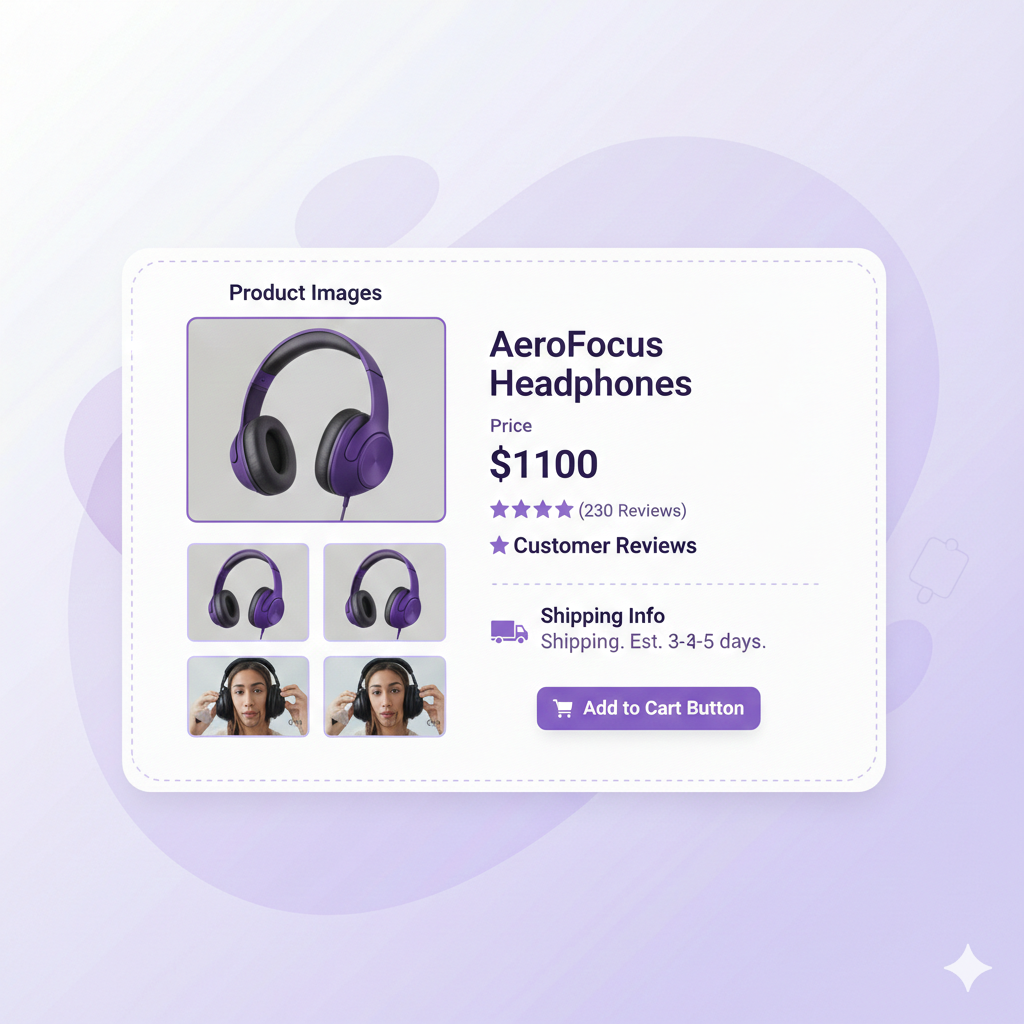
A strong product page clearly explains what the product is, who it is for, and why it is better than other options. Highlighting your unique selling proposition (USP) helps make your products different from competitors and shows customers why they should choose you. It uses simple language and focuses on benefits, not just features.
It makes buyers feel confident with good photos, size or fit information, reviews, and clear pricing, including shipping when possible. Using user generated content, like customer photos and testimonials, also builds trust and credibility with potential buyers.
Think about your own shopping behavior. If a product page feels empty, if the photos are unclear, or if you are not sure about shipping, you hesitate. When many visitors hesitate, your conversion rate drops. When you improve these details across your catalog, you increase ecommerce sales without having to increase your traffic.
Having a platform where you can quickly copy high-performing layouts, change sections, and roll out changes to many products at once, like you can with Penni Cart, makes this process much smoother.
Bring In the Right Traffic: Not Just More Visitors, But Better Ones
Traffic alone does not fix sales. You can have thousands of visitors and very few orders if they are not the right people. The goal is to bring in visitors who are likely to buy now or later. Let’s call them your target customers.
Search engine optimization (SEO) is still one of the best ways to get this kind of traffic. By improving your website's visibility and how easy it is to find in search engine results, you attract organic traffic from people actively searching for your products.
Category pages that target commercial keywords, product pages that match long-tail searches, and supporting blog content that answers real questions all help your ecommerce brand show up when people are already looking for what you sell. These efforts help increase online sales by reaching your target customers better. Paid channels like Google Shopping, search ads, and social ads can then work on top of this foundation and give you faster, more targeted visibility.
A global review of ecommerce performance data shows that average conversion rates across industries sit around 3.44%.
You will never convert everyone, but if your traffic is high-intent and your store is optimized, you can sit above average and make every click work harder.
Understanding Customer Feedback: Listening to What Drives Sales
Customer feedback is one of the most valuable things for any ecommerce store looking to increase ecommerce sales and improve customer retention. By actively listening to what your customers are saying, whether through email surveys, website feedback forms, or social media, you get direct insight into their needs, preferences, and problems. This feedback helps ecommerce store owners find what's working and what needs improvement.
Looking at customer feedback lets you spot trends and recurring issues that may be holding back your ecommerce sales. For example, if multiple customers mention confusion about sizing or shipping details, you can update your product pages to fix these concerns. Responding to feedback not only helps you optimize your store but also shows customers that you value their opinions, which can improve customer retention and loyalty.
Social media is a powerful tool for getting real-time feedback and engaging with your audience. Watching comments, reviews, and direct messages can show customer problems and opportunities to make your ecommerce experience better. By making data-driven changes based on customer feedback, you can increase ecommerce sales, create a more satisfying shopping journey, and build a loyal customer base that keeps coming back.
Stop Leaks at Checkout: Turn More Carts into Sales
You cannot talk about how to increase ecommerce sales without looking at cart and checkout performance. This is where a lot of money quietly disappears. Making your checkout page better to reduce abandonment is important, as even small improvements can have a big impact on completed sales.
Across the web, roughly 70% of online shopping carts are abandoned before the purchase is complete. Reports continue to show cart abandonment rates staying around this 70% mark year after year.
That means out of every 10 people who add a product to cart, only about three actually buy.
Common reasons are simple: unexpected costs at checkout, forced account creation, complicated forms, or payment methods that do not match what customers prefer. For ecommerce brands, this is good news in a way, because these are problems you can control.
When your ecommerce platform lets you customize the checkout flow instead of locking you into one rigid experience, you can test and remove friction much more easily. Penni Cart is built with this in mind, giving you more control over how your cart and checkout behave so you can keep more of the sales you already earned.
All of these improvements to your checkout page can really boost conversions at the final stage of the purchase process.
Use Offers and CRO to Increase Ecommerce Sales Without Heavy Discounts
Discounts can help, but they are not the only way to grow revenue. Smart offers and conversion rate optimization let you increase ecommerce sales without always cutting your margins.
Simple offers like free shipping thresholds, bundles that make sense together, and small first-order incentives for new visitors can push people to buy or increase their order size. Using discount codes in targeted campaigns, such as personalized popups, influencer marketing, or onsite notifications, can also drive more sales and boost customer engagement.
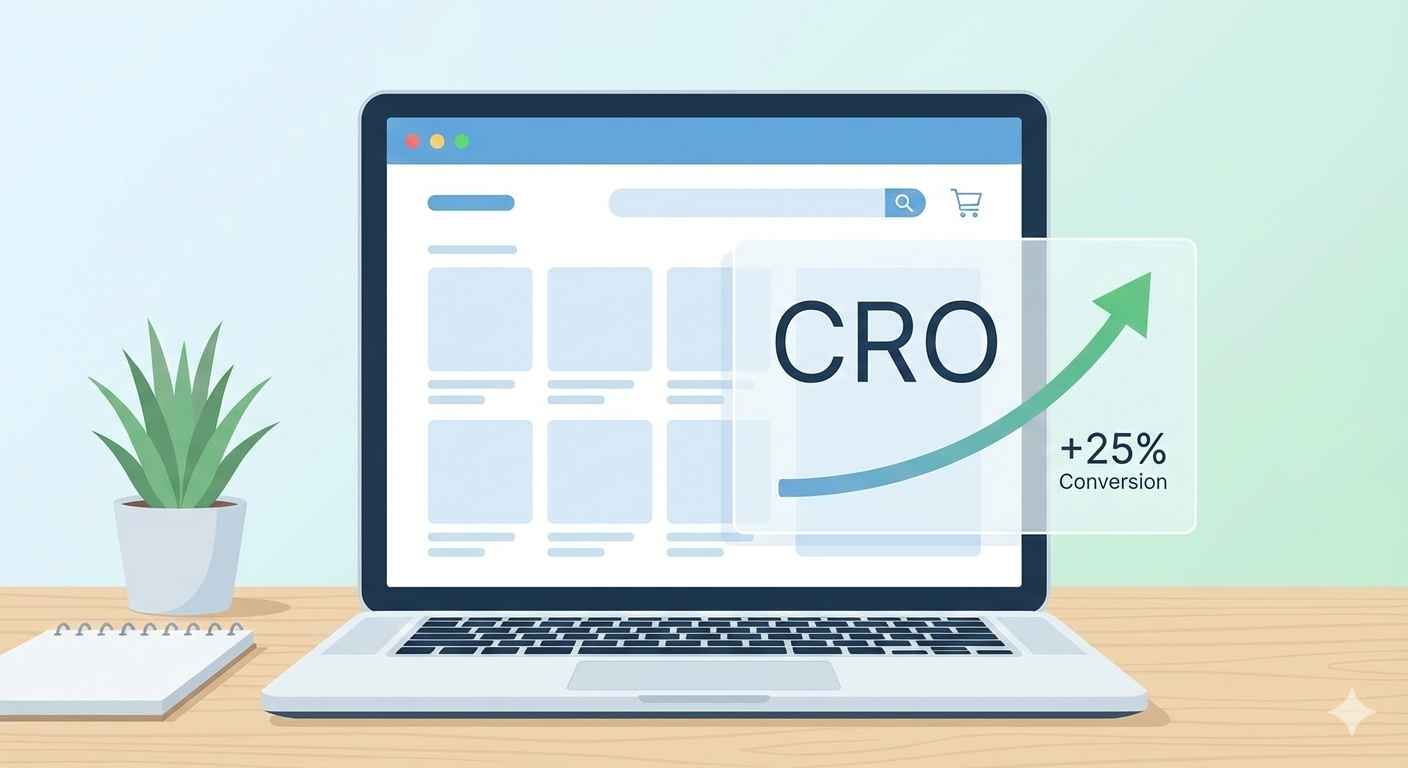
On the CRO (conversion rate optimization) side, changes like clearer call-to-action buttons, better use of social proof above the fold, and removing one or two unnecessary form fields can all make a difference.
The key is to test one meaningful change at a time. That way, you can see what actually works for your ecommerce brand instead of guessing. You should also compare how well paid advertising and paid ads work versus organic strategies to determine which approach brings more sales for your business.
Creating a Sense of Urgency: Motivating Shoppers to Act Now
A proven ecommerce sales strategy is to create urgency that motivates online shoppers to make a purchase before they miss out. When customers feel that an offer is limited or that a product might sell out soon, they are more likely to act quickly rather than wait and risk missing the opportunity.
Ecommerce businesses can boost sales by using tactics like limited-time discounts, countdown timers on product pages, and highlighting low stock levels. Offering free shipping for a short period or on orders above a certain amount can also encourage customers to complete their purchase.
Offering Subscriptions and Memberships: Building Recurring Revenue
Subscriptions and memberships are powerful tools for ecommerce businesses looking to increase ecommerce sales and build steady recurring revenue. By offering customers the option to subscribe to regular product deliveries or join a membership program, you create ongoing value that keeps them coming back.
Subscription models can include anything from monthly product boxes to exclusive access to new collections or special discounts. Memberships often provide perks like free shipping, early access to sales, or members-only content. These programs not only increase average order value but also improve customer retention by giving shoppers a reason to stay engaged with your brand.
Implementing Sustainable Practices: Growing Responsibly and Attracting Conscious Shoppers
Sustainable practices are becoming more important for ecommerce businesses that want to grow responsibly and attract conscious shoppers. Today's consumers are looking for brands that care about the environment and make ethical choices throughout their supply chain.
Using sustainable practices, such as using eco-friendly packaging, reducing waste, and sourcing products from responsible suppliers, can set your ecommerce brand apart and build lasting brand loyalty. Teaching your customers about your sustainability efforts and providing tips for reducing their own environmental impact can further strengthen your relationship with conscious shoppers.
By reducing your carbon footprint, using renewable energy, and partnering with like-minded organizations, you not only contribute to a healthier planet but also make your brand reputation better. These efforts can drive ecommerce sales by appealing to customers who care about sustainability, helping you grow your business in a way that's both profitable and responsible.
Choose Tools and Platforms That Make Growth Easier
The tools you use can either support or slow down your efforts to increase ecommerce sales. A flexible platform makes it easier to test changes, improve SEO, and connect with the tools you need for email, reviews, analytics, and advertising.
Some brands use all-in-one platforms like Shopify because they make it simple to launch and manage an online store. Others prefer more customizable setups that give them deeper control. Penni Cart is built for ecommerce brands that want that level of control without giving up speed. You can shape your cart and checkout, adapt product flows, and adjust layouts while still keeping everything clear and simple in day-to-day use.
Your choice of platform should also support your unique business model and growth strategy, making sure your operational approach aligns with your marketing and sales goals.
The main idea is not to chase tools for their own sake. Instead, choose a stack that lets you move quickly, test ideas, and build the kind of customer journey that matches your brand and your goals. When your platform helps you change faster, you can respond quicker to what your numbers and customers are telling you.
Final Thoughts: Growing Your Ecommerce Brand with PenniCart
There is no single trick that will suddenly double your revenue. But when you put the right pieces together, clear numbers, a fast and friendly site, strong product pages, better traffic, smoother checkout, and a focus on retention, you create a system that can keep growing.
The platform you build on has a big impact on how easy this feels. Penni Cart gives you a way to get a store live in minutes, adjust layouts and flows without heavy development, and plug into the tools you already use to market and support your customers. It is built to help ecommerce brands move faster, test more often, and turn those tests into real sales.
Start by picking one or two areas from this guide and improving them this month. Maybe you run a quick speed and UX check, rewrite your top product pages, or clean up the checkout flow inside Penni Cart. Every change teaches you something about what works for your brand.
Related reading
- Ecommerce CRO: 10 conversion fixes
- Reduce cart abandonment on Webflow
- Increase Webflow conversion rates
- Penni Cart pricing
Selling on Webflow and ready to lift revenue? See Penni Cart, the customizable cart and checkout that lives inside your Webflow Designer.
Related Articles


Webflow App