
Why CRO matters more for ecommerce in 2026
Why conversion rate optimization is the highest-leverage ecommerce work in 2026. Real talk on why CRO matters, with the mindset before tactics.
If you’re running an ecommerce store in 2026, you already know traffic is not the hard part anymore. You can get clicks from ads, social media, SEO, creators, and even AI search rollouts. The hard part is getting people to actually buy once they land on your site.
That’s why CRO on ecommerce matters so much right now.
CRO means conversion rate optimization. It’s the process of improving your ecommerce store so more visitors take the next step, and that next step is usually a purchase. It’s not about making your site “prettier.” It’s about making your store easier to understand, easier to trust, and easier to buy from.
And the truth is simple. If your store is not converting, everything else becomes expensive. Your ads become expensive. Your SEO becomes less valuable. Your influencer traffic becomes wasted. CRO fixes that by making your website do its job.
What CRO on ecommerce means?
CRO on ecommerce is the work you do to reduce friction in the buying journey.
Friction is anything that makes someone hesitate. Confusing product pages. Weak photos. No reviews. Slow load times. A checkout that feels sketchy. Shipping costs that appear too late. Too many required fields. Small things like that are the reason people leave even when they like the product.
CRO is how you remove those issues and replace them with clarity.
When someone lands on your product page, they should quickly understand what the product is, who it’s for, and why it’s worth buying. When they add to cart, they should feel like the next step is easy. When they hit checkout, they should feel safe and confident, not worried that they’re about to get scammed or stuck.
That’s CRO. It’s making buying feel simple.
Why CRO is even more important for ecommerce in 2026?
Ecommerce in 2026 is crowded. Most stores look the same, most stores say the same things, and customers have more options than ever. People also move faster now. They scan. They compare. They click away quickly. And if they don’t feel confident, they don’t buy.
Another big shift in 2026 is that discovery is changing. People find products through social content, creator recommendations, Google, and AI answers. That means your store has less time to convince someone. You might get the click, but you only get a few seconds to keep it.
This is why CRO is not optional anymore. It’s not something you do later when you’re bigger. CRO is how you survive and grow in a market where attention is short and trust is everything.
How CRO helps you get more sales with ecommerce in 2026?
The simplest way to explain it is this.
CRO helps you make more money from the traffic you already have.
If you have 10,000 visitors per month and you convert at 1%, you get 100 purchases. If you improve your store and move to 2%, you now get 200 purchases. Same traffic. Double the sales.
That’s why CRO is powerful. It’s not only a “marketing” thing. It’s a revenue lever.
CRO also improves the quality of your traffic indirectly. When your pages are clearer, people stay longer. When your checkout is smoother, more people complete the purchase. When your site builds trust, more visitors turn into customers, and more customers come back again.
So yes, CRO is about getting more sales. But it’s also about making your whole business more stable.
The most common ecommerce problems CRO fixes
A lot of stores think they have a traffic problem, but they actually have a conversion problem.
Here are the most common issues CRO helps fix, and you’ll probably recognize a few right away.
Some product pages don’t explain the product clearly. They rely on hype words, but they don’t answer real questions. People want details, benefits, sizing, materials, what’s included, and why it matters. If that’s missing, they leave.
Some stores don’t have trust signals. No reviews. No return policy. No shipping expectations. No social proof. That creates hesitation, and hesitation kills conversions.
Some stores have weak visuals. Blurry photos. Not enough angles. No videos. No lifestyle images. People are visual, and if they can’t “see” what they’re buying, they don’t feel safe buying it.
Some stores have checkout friction. Too many form fields. No express checkout options. Confusing shipping steps. It feels like work, and people quit when it feels like work.
Some stores have inconsistent experience. The homepage looks premium, but the cart and checkout look like a template. Fonts change. Layout changes. Tone changes. That breaks trust at the worst moment, right before the purchase.
CRO is basically the process of finding these problems and fixing them one by one.
What to optimize first if you want CRO results fast
If you want to start seeing improvements without turning this into a complicated project, focus on the parts that influence the buying decision the most.
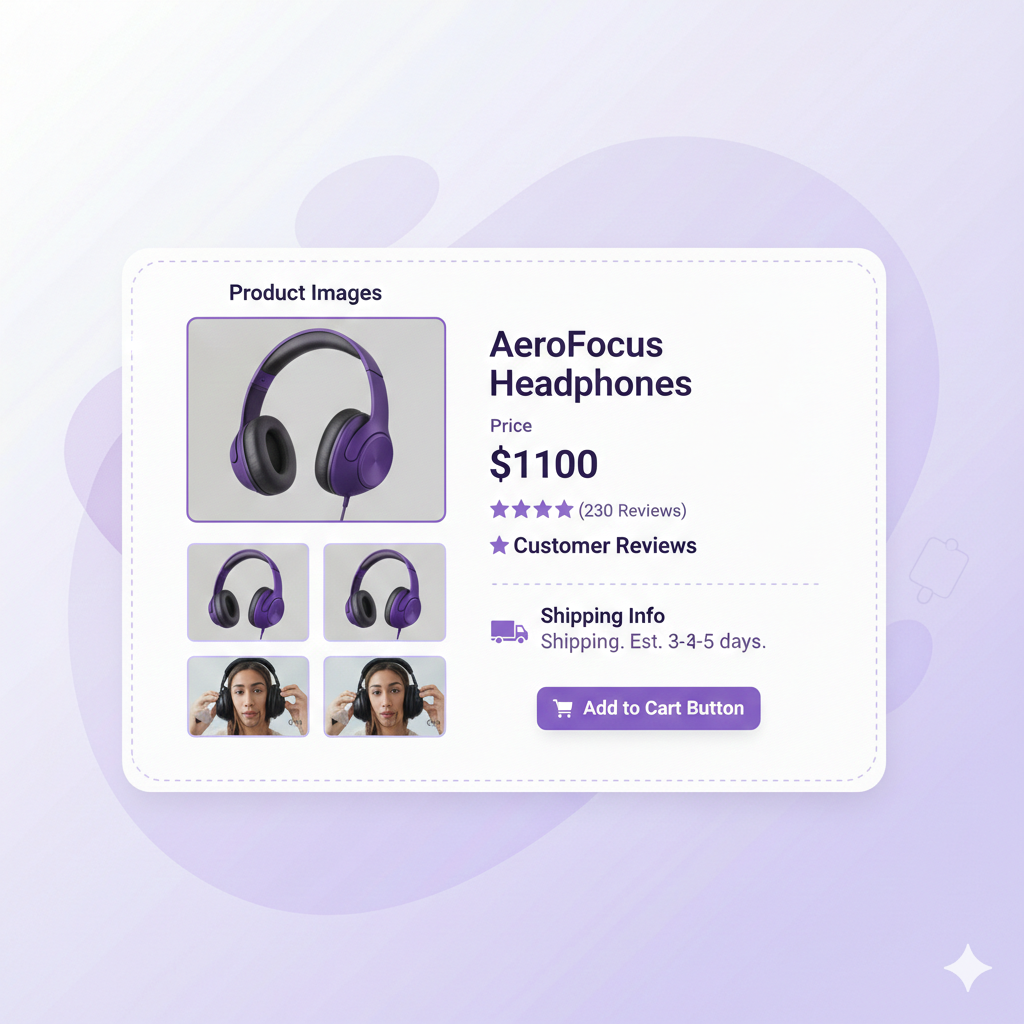
Start with your product page. This is where most conversions are won or lost. Make sure your product page answers what the product is, who it’s for, and why it’s worth buying. Add clear pricing. Add clear shipping and returns. Add good images. Add reviews if you have them. Add a simple FAQ if customers always ask the same questions.
Then look at your checkout. Remove extra steps. Remove unnecessary fields. Make sure totals and shipping feel clear. Make sure the checkout looks branded and consistent with your site.
Then look at mobile. A lot of ecommerce browsing happens on mobile, and if your mobile layout feels cramped, slow, or annoying, you lose sales quietly. The store might look fine on desktop, but if mobile is weak, conversions stay low.
Then look at speed. If pages take too long to load, people don’t wait. CRO includes speed because speed is part of trust.
You don’t need to do everything at once. The win is improving the biggest friction points first.
Testing is the real difference between guessing and growing
A lot of people change their store based on opinions. They redesign a page because they’re bored. They change a button color because someone said it might help. That’s not CRO.
Real CRO is testing.
You create a version A and a version B, and you measure which one converts better. Sometimes the changes are small, like moving reviews higher on the page. Sometimes it’s bigger, like rewriting the headline to make it clearer. The key is you’re not guessing, you’re learning.
Testing also helps because customers behave differently. One audience might need more reassurance. Another might care more about speed. Another might care about pricing and bundles. CRO helps you figure out what your buyers actually need.
CRO is not just for big brands
A lot of stores wait too long to work on CRO because they think it’s something only big companies do. But CRO is actually more important for smaller stores.
If you’re spending money on ads, CRO protects your budget. If you’re working on SEO, CRO makes your traffic more valuable. If you’re getting influencer traffic, CRO helps you convert it while the attention is hot.
Even a small conversion increase can pay for itself fast, because it raises revenue without needing more traffic.
Final thought
CRO on ecommerce is one of the most practical things you can work on in 2026, because it improves everything else you’re doing.
You can run ads, build SEO, and post content every day, but if your store is unclear or your checkout has friction, you’re going to feel like ecommerce is “hard.” It’s not always hard. Sometimes the experience is just not doing enough to help people buy.
If you want more sales with ecommerce in 2026, start by making buying feel easier. Make your product pages clearer. Make your trust signals stronger. Make checkout simple. Then test changes like a system, not like a guess.
That’s how you turn traffic into revenue consistently.
Related reading
- Ecommerce CRO: 10 fixes you can ship
- Reduce cart abandonment
- Webflow conversion rate guide
- Penni Cart pricing
Ready to turn CRO from theory into wins? See 10 actionable conversion fixes, then ship them on Webflow with Penni Cart.
Related Articles


Webflow App