
Ecommerce CRO in 2026: 10 conversion rate fixes that actually work
Ten ecommerce CRO tactics that actually move the needle in 2026. Concrete fixes for product pages, checkout, mobile, and trust signals.
If you’re running an e-commerce store, traffic is not the goal. Sales are the goal.
You can have the best-looking website, strong ads and solid SEO and still lose money if people land on your store and don’t feel confident enough to buy. That’s where CRO comes in, because CRO is what helps you turn interest into action and makes your store feel easier to trust.
CRO means conversion rate optimization. It’s the process of improving your store so more visitors actually take the action you want them to take, which for e-commerce usually means adding to cart and completing checkout. And the nice part is you don’t always need more traffic to grow, sometimes you just need a better experience.
Key takeaways
- CRO helps you turn more of your existing traffic into sales without relying only on more ads or more traffic.
- A conversion is not a visit. A conversion is an action, usually a purchase.
- You calculate conversion rate by dividing purchases by visitors, then multiplying by 100.
- Small friction points in product pages, cart and checkout can kill conversions even if your product is great.
- Testing matters because different shoppers behave differently and you won’t know what works until you compare versions.
- Most stores don’t need a crazy conversion rate to win. Even small increases can change revenue a lot.
What is CRO in e-commerce
CRO, conversion rate optimization, is basically how you make your store easier to buy from, not just nicer to look at.
The main idea is simple. A buyer lands on your website, they like the product but they still have questions. If your page doesn’t answer those questions clearly they leave or they go compare you to someone else and most of the time you never get them back.
CRO is how you reduce that friction and remove the not sure feeling. It’s not about tricking people, it’s about making the experience clearer and more convincing with the right information in the right place. When you do that you get more sales from the same traffic. And that’s why CRO is one of the best levers you can pull, especially if you’re already paying for ads or spending time building SEO traffic.
What counts as a conversion in e-commerce
A conversion means someone takes an action on your store and for most e-commerce stores the main action is a purchase.
So it’s not just someone landing on a product page, scrolling and leaving. It’s someone adding to cart, going through checkout and actually buying because that’s the moment that turns your traffic into revenue.
There are also smaller conversions that matter too, like adding to cart, starting checkout, signing up for an email list or clicking a shop now button. Those micro actions are useful because they show you where people are getting stuck in the journey.
But at the end of the day the main conversion that matters is the purchase. Everything else is just helping you understand what is stopping more purchases from happening.
How to calculate your conversion rate
This is the basic formula:
Conversion rate = purchases ÷ visitors × 100
Example: If you have 100 purchases and 5,000 visitors:
100 ÷ 5,000 = 0.02, then 0.02 × 100 = 2% conversion rate.
That’s it and this number is worth watching closely because even a small improvement can make a big difference. If you take a 2% store to 2.5% or 3% you’re basically making more money from the same traffic without needing to double your budget.
Why CRO matters more than people think
A lot of people assume CRO is only for big companies. That’s not true because CRO is really just improving the buying experience and every store needs that.
Even the biggest companies are constantly testing because they don’t guess what works they measure it. You mentioned Amazon as a good example here because they test tons of page versions to reduce friction and find what converts better and that mindset is exactly what smaller stores should copy.
The other thing people get wrong is conversion rate expectations. Some people think they should be converting at 30% or 50% and that’s not realistic for most e-commerce stores unless you have very specific conditions like brand loyalty, repeat customers or a super narrow offer. A common benchmark people reference across industries is around 4.2% but the real win is improving your baseline. If you’re at 1% and you get to 2% that’s a huge win and it usually comes from fixing friction not from magic.
The metrics CRO improves and what they actually mean
When you improve CRO you’re usually improving a few key numbers that tell you how your store is performing.
Bounce rate is how fast people land and leave. If your bounce rate is high it usually means the page didn’t match what they expected, it wasn’t clear, it loaded too slow or it didn’t feel trustworthy right away.
Cart abandonment is when people add to cart but leave before buying. This usually happens because checkout feels too long, too complicated or people get surprised by shipping costs, taxes or required fields that feel like too much work.
Customer retention is the long-term win. If the experience is good and people like the product they come back and that is why email lists matter because you can follow up, announce new products and bring people back with simple reminders or offers.
And finally trust and loyalty. The best stores don’t just sell once they build customers that return and that usually happens when the product is good and the buying experience feels smooth.
10 CRO improvements you can apply to your e-commerce store
1) Test different versions of your key pages
Don’t assume your product page is the best version just because it looks good. Try different layouts, different titles, different descriptions, different image order, different trust sections and even different offers like bundles or free shipping thresholds.
You don’t need to test 20 things at once. Even one test at a time helps you learn what your audience reacts to.
2) Make product info extremely clear
If a customer is thinking wait what exactly is this you already lost them because confusion slows down decisions.
Your product page should quickly say what the product is, who it’s for and why it matters. If people have to scroll too much to understand the basics they usually leave before they even get to the good part.
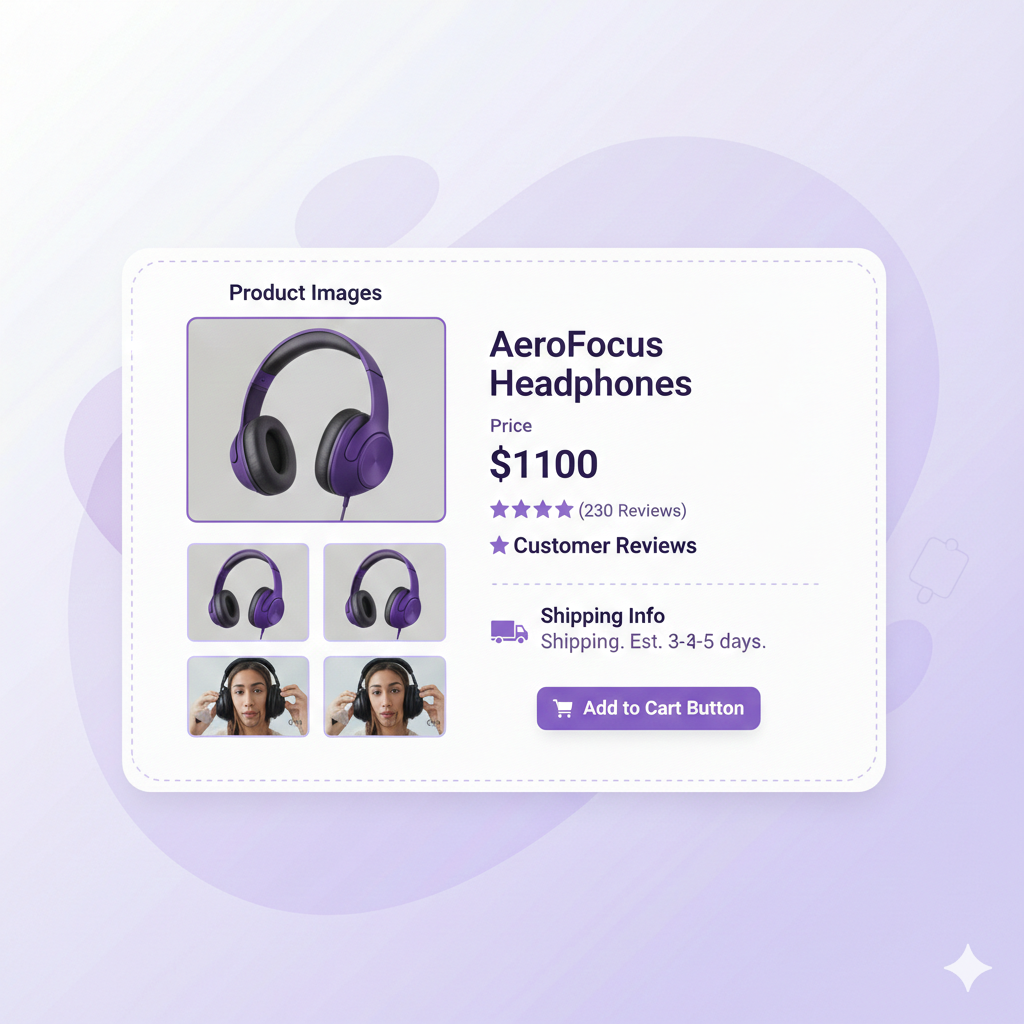
3) Upgrade your images and show more angles
People are visual and images do a lot of the selling before someone even reads your copy. If photos are unclear, inconsistent or look low quality it creates doubt. Use high quality images, show different angles, show size and scale and if possible show it in real life. The more guessing you remove the easier it is for someone to buy.
4) Add trust signals and social proof
Reviews, ratings, testimonials and UGC help a lot because they make the decision feel safer.
People want proof that someone else bought it and had a good experience. Even a few strong reviews can do more than a long paragraph of sales copy.
5) Improve your mobile experience
Mobile is a massive part of traffic for most e-commerce stores and numbers like 60% get mentioned a lot depending on the industry which is why this matters so much.
Make sure the page is easy to scroll, buttons are easy to tap, the font is readable and images don’t take forever to load. If mobile feels annoying people leave even if they wanted the product.
6) Simplify checkout
Checkout should feel easy, fast and safe. If it feels like a form with too many steps people drop off.
Remove unnecessary fields, reduce steps, make shipping and totals clear and keep the checkout consistent with your brand so it doesn’t feel like a random template.
7) Keep messaging consistent from ad to page
If someone clicks an ad that says black shoes and lands on a page that looks unrelated trust drops instantly.
Match the headline, the imagery and the offer to what got the click. This one change alone can improve paid traffic performance without changing your ads at all.
8) Reduce doubt with better product descriptions
Descriptions don’t need to be long but they need to answer what matters. Benefits, key features, materials, sizing, what’s included and what people usually ask.
Your goal is to remove the I’m not sure feeling because uncertainty is one of the biggest reasons people don’t buy.
9) Add smart recommendations and bundles
This helps conversion and it helps order value but the bigger win is decision support. If someone needs a second product show it.
Bundling, pairs well with or most people also buy sections help people feel guided and when people feel guided they buy faster.
10) Improve speed and track behavior
If your store loads slow people leave. Not because they hate your brand but because they’re busy and they have other options. Use Google PageSpeed Insights to find speed problems, use Google Analytics to see drop-offs and use Microsoft Clarity to watch how people actually behave. If you’re getting clicks but conversions are under 1% or 2% that usually means the page or checkout needs CRO work.
Final thought
CRO is not a one time fix. It’s a habit and the stores that win treat it like a routine not a one off project. You keep improving what matters, you keep removing friction and you keep testing small changes until your store feels easier and easier to buy from.
Trends are helpful but execution is what wins. If you make it easier for customers to understand the product and feel confident buying your conversion rate goes up and everything you do in marketing becomes more profitable.
If you’re building in Webflow and you want a no-code way to keep the shopping experience consistent from product page to checkout Penni Cart is an option to try. You can fully customize your product pages, cart and checkout directly in the Webflow front end without code, it’s free to start so you can test everything before launching and it helps you keep the whole purchase flow on-brand from start to finish
Related reading
Want to ship these CRO fixes inside your Webflow store? See Penni Cart, full design control over cart and checkout, no third-party redirect.
Related Articles


Webflow App