
Ecommerce trends 2026: what's changing for online stores
AI search, social commerce, headless checkout, conversational shopping. The ecommerce trends actually shaping 2026, with Webflow-ready takeaways.
If you’re building an e-commerce store in 2026, the big thing that you need to know is this: understanding the important ecommerce trends is crucial for success. It’s not just about having products on the Internet anymore. Most stores look the same. Most stores say the same things. And a lot of stores still lose sales for the same reasons.
You can see this shift also in the way people shop. Adobe Analytics showed that generative AI traffic to retail sites in the US grew 1,300% during the 2024 holiday season, compared to the previous year.
So what’s really changing in 2026?
From what we see, the brands that are winners are the ones that make the buying experience feel clear, personal and consistent from start to finish. That includes product pages, product content, videos, trust signals, and checkout. This article is here to cover the important ecommerce trends that are shaping ecommerce right now, and what you can do about it in a simple way.
Key takeaways
- AI helps you to move faster, but the brands winning are those that use it to get content to make more sense, not publish generic pages.
- Staying on top of current trends in ecommerce, such as evolving consumer behaviors and new technologies, is essential for shaping effective strategies.
- Personalization is turning into the new normal because shoppers want to be directed by the store without being confused.
- Search is changing because people are now answering through AI and questions are shaping discovery so product pages need to tell people what it is, who its for and why it matters.
- Video is no longer optional as it eliminates doubts faster than text and makes people feel confident buying.
- Creators and influencers continue to drive trust and your site needs to be ready to convert that traffic.
- Optimizing your approach for future sales is crucial, adapting to new ecommerce trends like voice search and personalized marketing helps capture upcoming revenue opportunities.
- Brand consistency is more important than ever and especially from the product page to checkout because design gaps kill trust.
Trend 1: AI is the new normal for ecommerce businesses' content and merchandising
AI is everywhere in e-commerce now, and it makes sense. Artificial intelligence is transforming how store owners and teams manage their online shops. With so much to write and update, product pages, category pages, FAQs, policies, emails, social content, AI can help you go faster and smarter. Machine learning, working alongside AI, enables ecommerce businesses to personalize customer experiences, automate business processes, and optimize real-time data for better results. AI-powered tools are also being used to predict customer behavior and optimize inventory management, helping businesses stay ahead of demand and reduce stockouts.
AI-driven content creation tools are streamlining the generation of product descriptions, marketing copy, and even augmented reality assets, making it easier to engage customers and enhance the shopping experience. Marketing automation, powered by AI, allows for automated, personalized marketing campaigns and dynamic messaging across multiple channels, improving customer engagement and operational efficiency.
But here’s the truth. AI is a double-edged sword.
If you’re using AI to create content and you’re not going to look over it and humanize it and make it sound real, then the content tends to come across as generic. When a page is generic people don’t believe it. When people won’t trust it, they won’t buy. So in 2026, it’s not about using AI to publish more. The goal is to use AI to publish clearer.
For this, the best way to think about AI is like this. It’s an assistant, not the author. Use it to help you get ideas and structure then rewrite it like you’re explaining it to a real person. Add information that AI will never know, however, such as what customers typically ask, what people often get wrong, and what’s most important before someone makes a decision.
Trend 2: Personalised shopping experiences are becoming the standard, not the bonus
In 2026, people expect personalized shopping experiences, where the store knows what they’re shopping for and tailors interactions to their needs. Not in a creepy way, but in a helpful, seamless way.
Shoppers want less guessing. They don’t want to dig through pages or be presented with a wall of text. They don’t want to compare a bunch of products and still feel unsure. They want the store to guide them, even if it is subtle, by optimizing the customer journey at every touchpoint.
This can be as simple as helping someone select the right product faster, showing the right information at the right time, or making it easy to compare products without confusion. Hyper-personalization uses real-time data and AI to deliver individualized shopping experiences, decreasing confusion and easing decision-making.
Trend 3: AI is changing the way people discover products through search and AIs answers
Search is still important and SEO still matters, but the way people discover products is evolving. Search engines are increasingly powered by AI, changing how they rank and surface relevant results, especially as more consumers use them to find storefronts and products. The rise of voice search, driven by voice assistants like Amazon Alexa and Google Assistant is also influencing how consumers interact with ecommerce platforms and search for products online. Voice search is growing in popularity, impacting shopping behaviors and making it essential for ecommerce sites to optimize for voice-friendly queries.
This is why clarity is now more important than ever.
In the process of creating product content that works well, we keep the structure simple. You want to know what the product is, who is the market for it, why they need it. That’s the base. If the page answers those things quickly, then you take the doubt away. When you eliminate doubt, conversions increase.
In 2026, clarity is not only a preference in writing. It’s a growth strategy. It helps real people, but it also helps AI understand your pages better, since AI can only work with what you actually wrote.
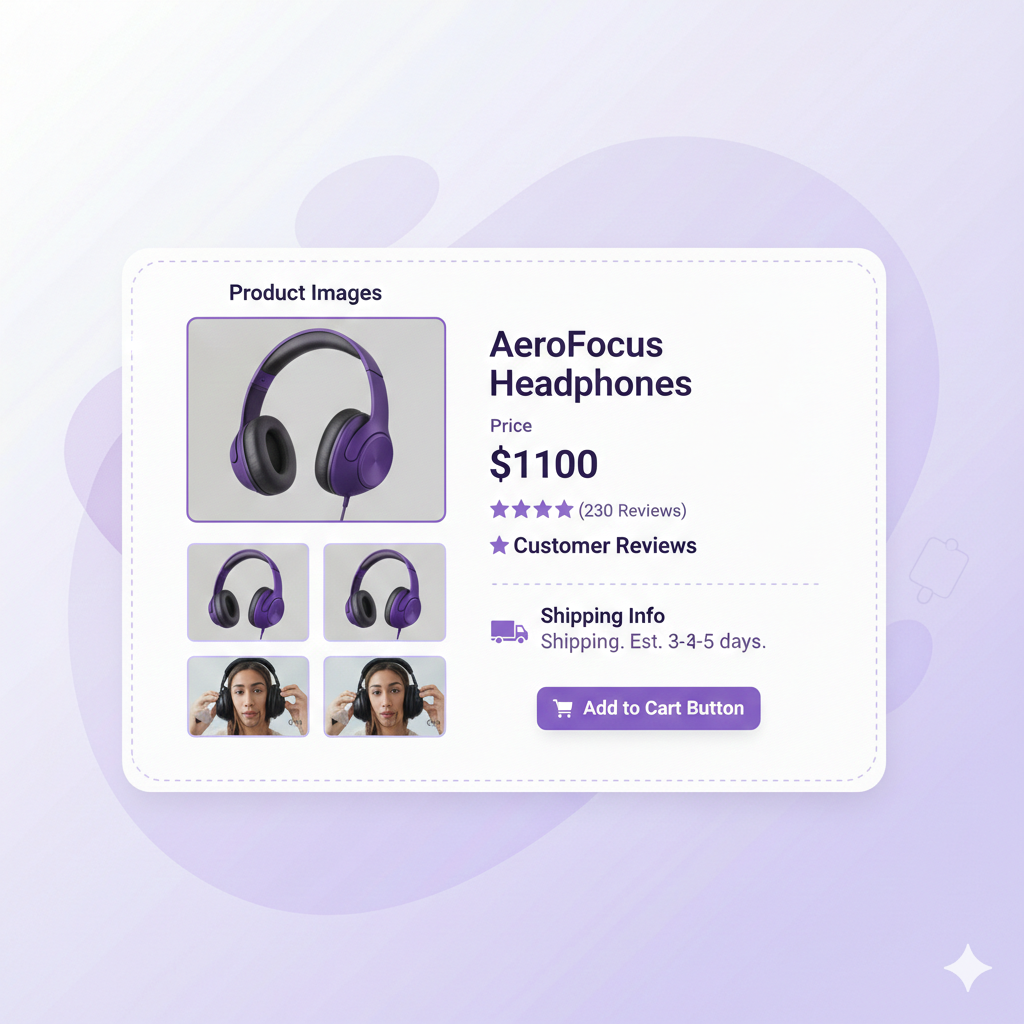
Trend 4: Video is now part of the product page not just social media
A lot of brands are still treating video as you post on social media only. But, in 2026, video is part of the buying decision.
People want to see the product. They want to see how it works. They want to see what it is like in real life. Video eliminates questions more quickly than text.
User-generated content, such as customer videos and reviews, is also playing a bigger role in building trust and influencing purchase decisions. Authentic content from real buyers provides social proof and helps potential customers feel more confident.
Emerging technologies like augmented reality are further enhancing ecommerce experiences. AR allows shoppers to visualize products in their own environment before making a purchase, bridging the gap between online and in-store shopping and reducing uncertainty.
And the good news is that it need not be complicated. It doesn’t have to be a huge production. What works is simple content that highlights the product clearly. A little demo, a little unboxing, a “here’s what you get” or a quick clip to answer the major objection that people always have.
If a person is not sure, he or she will not buy. Video helps people feel sure.
Trend 5: Creators and influencers continue to be driving trust, and social commerce continues to grow
Ads still work but trust is the real currency. People trust people, not brands, so creators and influencers are still important. Social media platforms and social platforms like Instagram, Facebook, and TikTok have become key environments for creator and influencer activity, enabling direct purchases within their apps and driving brand discovery. Social media marketing and well-planned marketing campaigns are essential for leveraging creator content, integrating user-generated content, and optimizing engagement. Influencer marketing blends social proof with storytelling, turning product recommendations into direct conversions and helping brands reach new audiences.
Live content is an added attraction. Live shopping events on social media platforms often see conversion rates of up to 30%, significantly higher than traditional ecommerce. Flash sales and live shopping tactics during these events create urgency and encourage spontaneous purchases, especially when paired with influencer partnerships that generate buzz around product launches.
A very simple approach that works well is to send a product to a creator and have them try it out and share their real experience. When the review is authentic, people are more likely to visit your site. Effective social commerce strategies enhance customer engagement and customer interactions by collecting and analyzing touchpoints across website visits, social media, and support channels, providing valuable insights for optimizing the customer experience.
What is next is how the site performs after the visitor clicks through. If the product page is vague or the experience is disorganized, they’ll leave. Consumers increasingly expect seamless ad-to-cart journeys on social media, reducing friction in the purchasing process. Creator marketing works best when your site tells the story using clear information, appealing visuals, and a friction free purchase flow.
Creator content also becomes an asset. You can use it across product pages, advertisements, emails, and home page sections, making it more than just a single post. It becomes a part of your trust building strategy and helps drive ongoing customer engagement and sales through social commerce.
Trend 6: Brand consistency throughout the entire journey is a conversion lever
This is still one of the greatest challenges we see.
Many stores lay out large amounts of money to make the homepage and the product pages look good, but the cart and checkout feel like another website. Fonts, spacing, layout, tone, they all change, and trust is broken. Maintaining brand consistency throughout the entire customer journey is essential for optimizing customer experience, which is a key driver of brand loyalty and conversion rates.
In e-commerces, trust is tenuous. Small details can cause hesitation and when shoppers hesitate, they abandon the checkout. Omnichannel strategies, such as Buy Online, Pick Up In-Store (BOPIS), are increasingly blurring the line between online and offline shopping, further emphasizing the need for a seamless and unified customer experience across all touchpoints.
In 2026, the most successful stores approach the whole journey as one complete experience. If your brand is high-end, the checkout needs to be high-end. A clean, modern site shouldn’t leave the cart and checkout looking like a generic template because people notice, even if they can’t put their finger on it.
The importance of flexible payment options in 2026
Flexible payment options are becoming increasingly crucial for ecommerce businesses in 2026. As online shopping continues to evolve, today’s online shoppers expect a seamless, personalized shopping experience, including the freedom to pay in the way that suits them best. Ecommerce brands that prioritize flexible payment methods are seeing higher customer satisfaction, fewer abandoned carts, and a steady rise in online sales.
The ecommerce industry is more competitive than ever, and consumer behavior is shifting rapidly. Some customers prefer the speed and security of digital wallets like Apple Pay or Google Pay, while others stick with traditional credit or debit cards. With the rise of mobile shopping and social commerce, shoppers are completing purchases on a variety of devices and platforms. By offering a range of payment methods, ecommerce businesses can appeal to a broader target audience and make it easier for every customer to complete their purchase.
Flexible payment options also help ecommerce brands stand out in a crowded market. As more businesses compete for attention on social media and digital commerce platforms, a frictionless checkout experience can be the deciding factor for many online shoppers. Payment methods like buy now, pay later (BNPL) are especially popular, giving customers more control over their spending and reducing the likelihood of cart abandonment.
For ecommerce companies, the benefits go beyond customer satisfaction. Streamlined payment processes can reduce operational costs and improve efficiency, especially when integrated with analytics tools like Google Analytics. By analyzing customer data and tracking which payment methods are most popular, ecommerce businesses can gain valuable insights into customer behavior and preferences. This data-driven approach allows brands to continually refine their payment strategies, ensuring they meet the evolving needs of their audience.
Ultimately, flexible payment options are no longer a nice-to-have, they’re a must for any ecommerce site looking to drive future growth. By understanding consumer preferences and leveraging analytics tools to provide valuable insights, ecommerce brands can shape online retail experiences that boost customer loyalty and maximize online sales. As the ecommerce industry continues to innovate, those who adapt their payment methods to match changing shopping habits will be best positioned for success.
Why Webflow brands can stand out more in 2026
Many ecommerce platforms help you sell products, but to stand out in 2026 it is more than what you offer. Ecommerce platforms play a crucial role in enabling unique brand experiences, supporting features like personalization, mobile payment support, and subscription management. It’s about the confidence that shoppers feel when it comes to making a purchase.
That’s where Webflow brands get an edge. Platforms like Webflow not only allow you to create a brand experience that feels untemplated and unique, qualities that matter now as e-commerces become more crowded, but also drive operational efficiency by streamlining processes such as inventory management, order processing, and customer data integration. Additionally, improving website load times is a key strategy for ecommerce platforms to enhance user experience and increase conversion rates.
When buyers are faced with a store that looks consistent and intentional, confidence increases. Confidence is what converts traffic to sales.
What to do next in 2026
To use these trends simply, keep the following in mind: clarity first. Make sure that your product pages are descriptive of the product, its audience, and its value. Add video so shoppers can see what exactly they're buying. Use AI to augment your existing assets, but not to lose your voice. Use creators to build trust and check if your site can convert its traffic. Finally, audit the entire journey to make the experience feel like one unified brand from homepage to checkout.
At the end of the day, trends lead you, but execution makes you successful. The brands that grow are those that make their customers easily understand the product and feel confident to buy it.
If you're building in Webflow and looking for a no-code solution that will keep the shopping experience the same from the product page to the checkout, try Penni Cart. It starts for free, has no transaction fees and remains fully within Webflow. It's free till they launch it, then $39 a month for a live domain. Currently available for the US and Canada, Penni Cart supports gateways such as Stripe, Authorize.Net and Elavon.
Related reading
Building a Webflow store for 2026? See how Penni Cart works, full design control + the integrations modern stores need.
Related Articles


Webflow App